

It turns out that a healthy and balanced relationship really is one of the best ways to protect our hearts. And not just in the romantic sense. As American Heart Month, February is an opportunity to revisit our relationship with food.
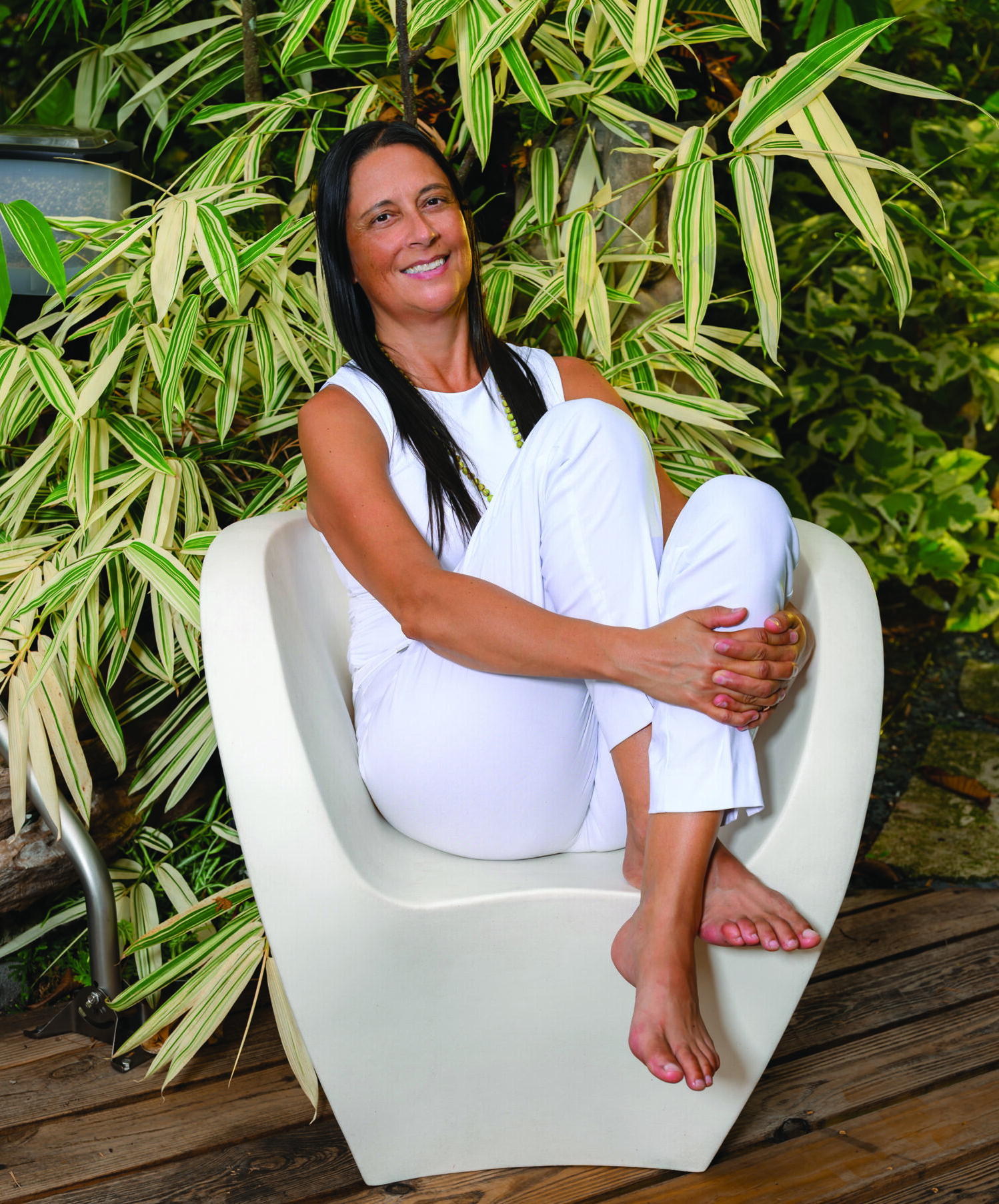
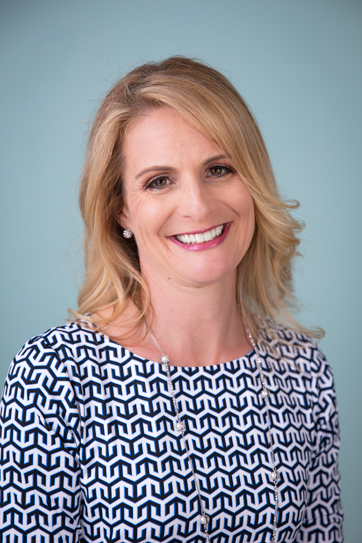 “We have to have our heart in the middle of the plate,” says Christie Caggiani, a registered dietician and co-founder of Therapeutic Oasis of the Palm Beaches, which provides services to people with eating disorders and other mental health issues.
“We need to be mindful when eating, notice the food, make sure we’re eating in an environment that is positive, and not in the middle of a stressful situation.”
Organizing a well-balanced meal or snack gives the brain time to register the intake of food, leaving us satisfied. Conversely, eating fat-free on the fly leaves us wanting more while depriving the heart of nutrients.
“We can be heart healthy with whole grains, beans, lentils, and mono- and unsaturated fats, such as avocados and olive oil,” she says. “Make sure you add color and lean meats and seafood, so we’re covering those bases.”
Several scientific studies support Caggiani’s recommendations.
A December 2018 study of 25,000 women, conducted by the Harvard T.H. Chan School of Public Health, concluded that a Mediterranean diet—which recommends olive oil instead of butter and margarine, chicken and turkey instead of red meat, and plenty of whole grains, fruits, vegetables and nuts—might reduce the risk of cardiovascular disease.
Women who adhered to the Mediterranean diet had 25-percent less risk of developing the disease over the course of 12 years compared with women who did not. (Such a diet also can prevent or help to delay the onset of Alzheimer’s disease, as reported in the November issue of Lifestyle.)
At Mayo Clinic, nutritionists recommend the DASH diet. Short for “Dietary Approaches to Stop Hypertension,” it follows the same basic guidelines and also addresses sodium intake. A typical American, whose diet likely includes processed food, consumes 3,400 milligrams of sodium a day, while DASH recommends no more than 2,300 milligrams daily to lower systolic blood pressure. (The American Heart Association guideline is more stringent, capping daily intake for all adults at 1,500 milligrams.)
In South Florida, where we’re often in shorts and bathing suits, a growing number of people live at the extremes of diet and exercise. For them, avocados and nuts are the devil because they have fat (albeit the good kind).
“Eating disorders are fast-growing among the middle-aged and above, among empty-nesters, and we’re seeing a lot more men with eating disorders and exercise bulimia,” Caggiani says, noting that such conditions weaken and shrink the heart.
For example, someone obsessed with being thin might avoid carbohydrates after a strenuous workout, believing protein is all that’s essential for an ideal physique. But proteins need carbs to do their job. After a workout, whole grains help a body refuel, a necessary step before protein can heal and strengthen muscle. Without carbs, the body will burn protein for fuel—and there go the pectoral and bicep muscles.
At the grocery store, a diet extremist might feel angst in the salad dressing aisle, opting for a fat-free version instead of one with olive oil. But eaters need the oil to absorb fat-soluble vitamins so they can get into the bloodstream.
Being mindful about food and exercise means purging the guilt.
“Anytime we feel we have to do it instead of wanting to do it is a bad sign,” Caggiani says. “We should be feeling, ‘I want to do this, not have to do this.’ ”
As for those Valentine’s Day chocolates and desserts, don’t worry about indulging.
“You need to give yourself permission to eat. That’s how we’re designed to run,” Caggiani says. Besides, “cookies are good.”
The Insider
News and news connected to the health scene in South Florida
Green is Good
Five national wildlife refuges. Three national parks. One national historic site. Fourteen state parks. These are the earthly treasures gracing the shore of Southeast Florida down to the Keys. Better still, all this green space has health benefits.
“Our study shows that living in a neighborhood dense with trees, bushes and other green vegetation may be good for your heart and your blood vessels,” says Aruni Bhatnagar, the lead author of a December 2018 report out of the University of Louisville. In an article on the university’s website, the professor and distinguished scholar in the Institute of Molecular Cardiology notes that, “Increasing the amount of vegetation in a neighborhood may be an unrecognized environmental influence on cardiovascular health and a potentially significant public health intervention.”
Warning Signs
In a recent fundraising letter, the American Heart Association included simple lists on what to look for in the event of a stroke or heart attack. Call 9-1-1 and get to the hospital immediately if you answer “yes” to any of these questions.
Stroke
• Ask the person to smile. Does one side of the face droop or feel numb?
• Ask the person to raise both arms. Does one arm drift downward?
• Have him or her repeat a simple sentence, like “The sky is blue.” Is the sentence repeated incorrectly?
Heart Attack
• Does chest discomfort last more than a few minutes, or go away and come back?
• Is there pain in one or both arms, the back, neck, jaw or stomach?
• What about a cold sweat, nausea or lightheadedness?
Acting fast can save lives—even your own.