

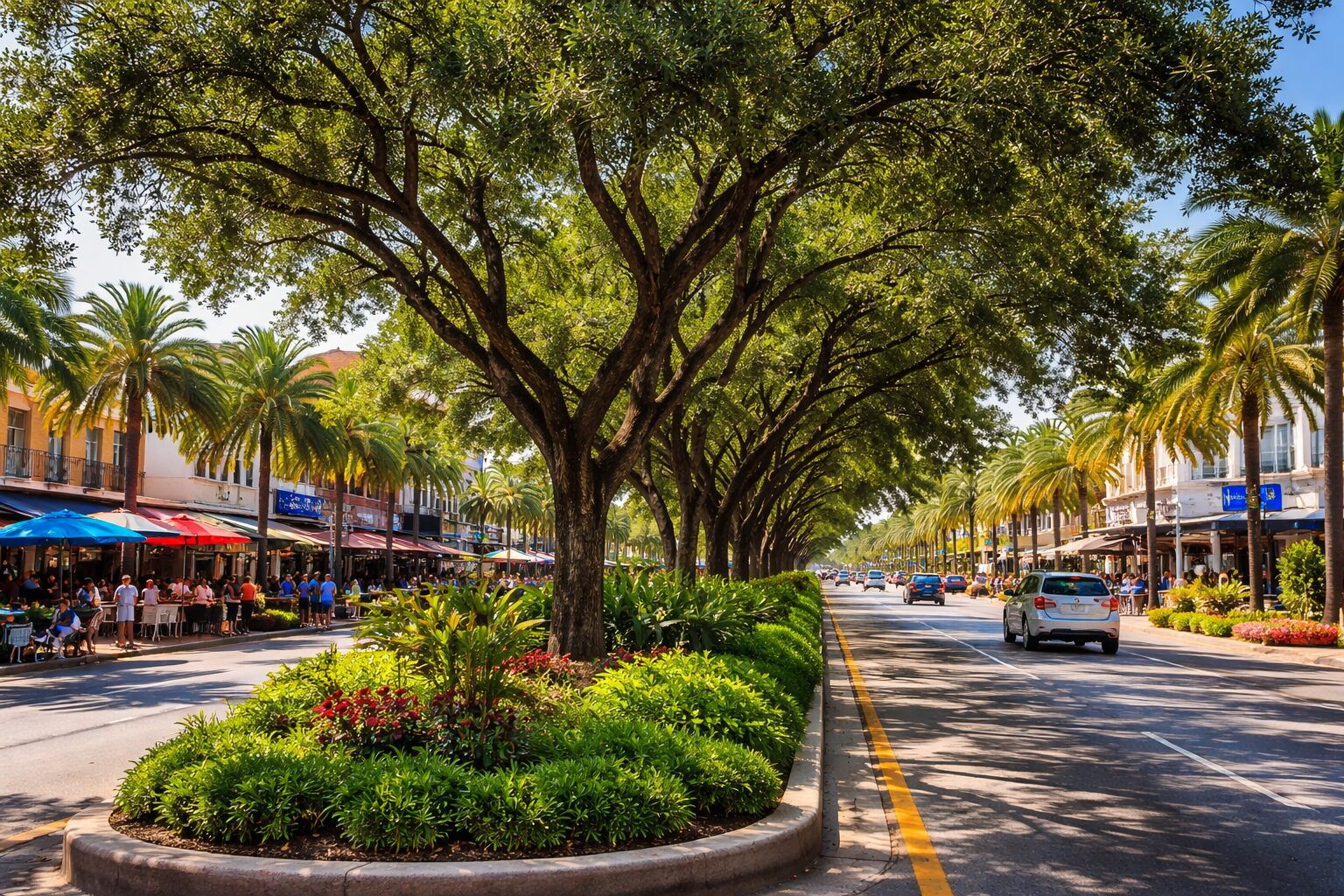
The future of the iconic black olive trees lining Las Olas Boulevard remains uncertain after Fort Lauderdale city commissioners postponed a vote that was expected to determine whether the trees stay or go. The delay has intensified a long-running community debate over how the city should balance growth, walkability, and the preservation of one of its most recognizable streetscapes.
A Signature Canopy at the Center of the Dispute
The leafy canopy that stretches down the median of Las Olas has become part of the boulevard’s identity, drawing both residents and visitors to its shaded walkways, restaurants, and boutiques. For many, the mature black olive trees are not just decorative—they are an essential part of the neighborhood’s charm and character.
Preservation advocates argue the trees contribute to the corridor’s walkability, reduce heat, and create a distinct aesthetic rarely found in South Florida’s urban areas. They see the median as an anchor of the boulevard’s personality and worry that removing the trees would permanently alter the feel of the street.
A Redesigned Streetscape Under Consideration
City officials, however, are weighing a comprehensive redesign of Las Olas Boulevard that would remove the median to make way for wider sidewalks, more outdoor dining, improved bike lanes, and additional pedestrian features. Supporters of the redesign say the historic layout no longer reflects the needs of a growing city and that a modernized streetscape could enhance mobility, visibility, and business opportunities.
The proposed redesign is part of a broader effort to rethink how the boulevard functions for residents, visitors, and local businesses. Wider sidewalks could better accommodate crowds, while updated infrastructure could improve flow between downtown, the beach, and surrounding neighborhoods.
For those in favor of the plan, the goal is not to erase the character of Las Olas but to improve safety and create a more flexible space for the future.
Community Voice: Strong Pushback and a Call for Compromise
The idea of removing the trees has sparked emotional reactions from the community. Residents and local business owners held a “Save The Trees” rally ahead of the December commission meeting, emphasizing the olive canopy’s cultural and environmental importance. Many expressed concern that no replacement—no matter how thoughtfully planned—could replicate the feeling of walking beneath the mature trees.
Some compromise proposals include planting new canopy trees elsewhere along the boulevard or integrating green space into the redesign, but opposition groups insist that the existing trees are irreplaceable.
Decision Pushed to January
The city’s decision to postpone the vote until January 20 gives commissioners more time to evaluate alternatives and gather public input. Officials acknowledge that the conversation reflects broader questions facing the city as it grows: how to preserve historic character while meeting modern needs.
The continued debate comes at a time when Fort Lauderdale is also pursuing larger environmental goals, including expanding its overall tree canopy and investing in long-term climate resilience. How the Las Olas issue is ultimately resolved may signal how the city plans to balance green infrastructure with urban development in the years ahead.
What’s Next
As the January vote approaches, both preservation advocates and redesign supporters are preparing for another round of public testimony. Whether the olive trees remain or are removed, the discussion has underscored the importance of thoughtful planning—and the deep connection Fort Lauderdale residents feel to the spaces that define their community.