

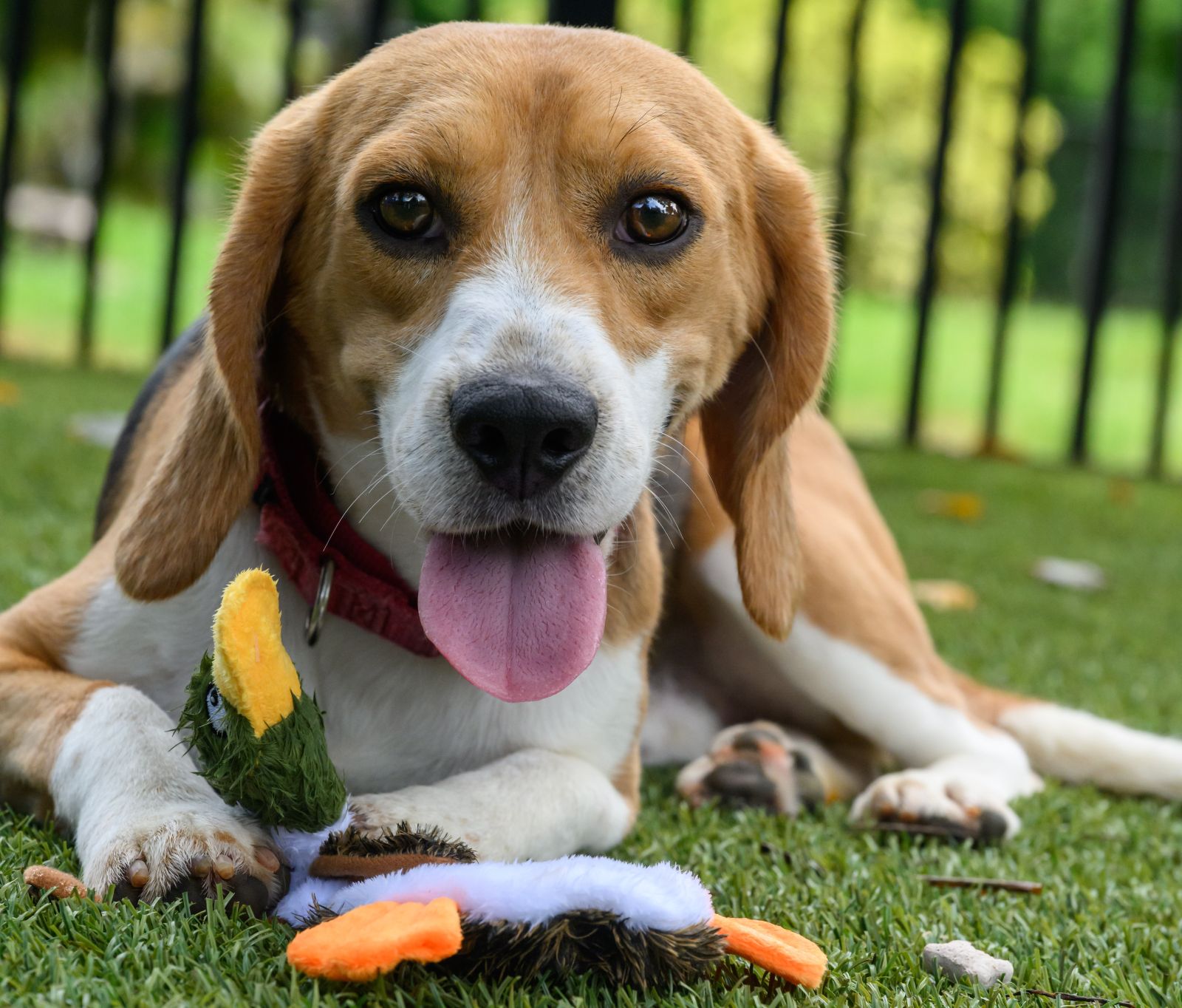
Former Research Beagles Get a Second Chance at Tri-County Animal Rescue
On an overcast afternoon at Tri-County Animal Rescue in Boca Raton, three beagles cautiously step into a fenced dog park. The morning rain has given way to a patch of sunlight, and a rainbow is beginning to emerge from the clouds.
At first, the dogs stay close together, sniffing the perimeter and cautiously investigating their surroundings. They hesitate at the feel of grass beneath their paws. Every sound seems to catch their attention. A tossed tennis ball prompts a startled glance. Slowly, curiosity wins out.
Within minutes, the trio is exploring the yard, sniffing plants, chasing one another, and discovering a world that, until recently, they had never known.
For these beagles, every experience is new.
They are among the 1,500 beagles recently released from Ridglan Farms, a controversial breeding and research facility in Blue Mounds, Wisconsin. For decades, Ridglan bred beagles to sell to testing laboratories, with animal welfare advocates campaigning for the dogs’ release.
This spring, a breakthrough came when South Florida-based Big Dog Ranch Rescue partnered with the Center for a Humane Economy to negotiate an agreement securing the release of the dogs. The organizations worked together to purchase the animals and coordinate what became one of the largest canine rescue operations in recent U.S. history. Immediately, rescue groups across the country volunteered to take in the dogs.
Tri-County Animal Rescue was among those that answered the call, taking in 15 of the beagles. “We’ve never turned down a rescue,” says co-founder and president, Suzi Goldsmith.
For Goldsmith, helping animals in need has been a lifelong mission. Long before the Ridglan beagles arrived in Boca Raton, Tri-County was responding to disasters and large-scale rescue efforts around the world.
One of the organization’s earliest major efforts came after Hurricane Katrina devastated New Orleans in 2005. Goldsmith remembers immediately organizing a trip to Louisiana with a small team and a van funded through a donation from philanthropist Lois Pope.
“We went right away,” Goldsmith recalled. “We gathered food and supplies, and brought dogs back with us.” The team traveled to the region multiple times, rescuing more than 100 displaced animals from overwhelmed shelters. Many had been abandoned in the chaos following the storm.
Since then, Tri-County has expanded its reach far beyond South Florida.
The organization has participated in rescue efforts following floods in Mississippi and Oklahoma, helped save street dogs in Turkey, and works with rescue partners in China and Puerto Rico. Just weeks ago, Tri-County stepped in to take in more than 50 Chihuahuas that were part of a severe hoarding situation in Tennessee, where authorities seized 140 tiny dogs. Many of the Chihuahuas are now available for adoption, while others are still receiving much-needed care. “People call us, and we go,” Goldsmith said.
That philosophy has helped make Tri-County one of the region’s most recognized animal welfare organizations. Since its founding, the non-profit has rescued more than 101,000 animals, with dogs accounting for the majority of intakes.
That commitment extends to the shelter’s veterinary hospital, which performs nearly every type of surgery on-site. Goldsmith points to animals such as Chocolate Chip, a tiny toy poodle whose jaw was shattered and required extensive treatment, as examples of the lengths Tri-County will go to save a life. “We’re not statistics here,” she said. “Every animal matters.”
The newly arrived beagles present a different challenge. All the dogs required spay and neuter surgeries and medical checks. For the volunteers and staff, documenting the tattoo numbers inside their ears was an emotional reminder that these dogs would never have had a soft bed, a gentle touch, or even a proper name without their efforts.
Despite their difficult pasts, the beagles are making remarkable progress. As the sun breaks through the clouds, they explore their newfound freedom. For the first time in their lives, they are experiencing the simple joys of being a dog—and thanks to the efforts of rescue organizations across the country, they now have the chance to spend the rest of their lives doing exactly that.
For Goldsmith, moments like these are why she continues doing the work after decades in animal rescue.
“Dogs make my heart sing,” she said.