

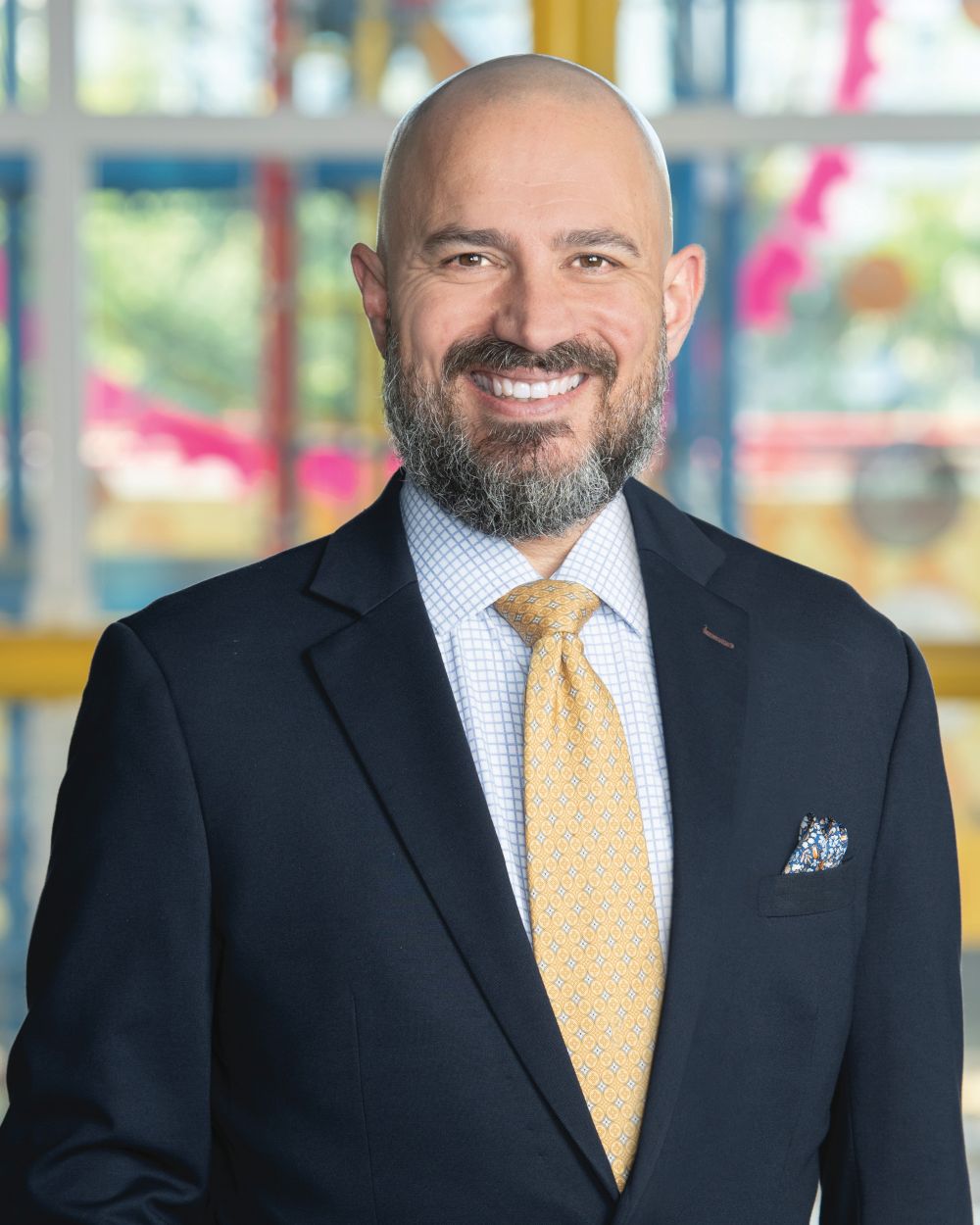
Nearly 50 years after the Museum of Discovery and Science (MODS) began introducing South Florida children to the wonders of science, president and CEO Joe Cox is thinking about what comes next.
The answer involves artificial intelligence, climate innovation, and new technology. But it also involves children digging in dirt, building with their hands and, most importantly, learning to ask questions. “We truly want people to be inspired by science, and we want to inspire people to dream bigger,” Cox says.
Cox, who has led the Fort Lauderdale museum since 2018, sees that balance between technology and hands-on discovery as essential to the museum’s future.
MODS has been evolving since its founding in 1977, and Cox says its mission has expanded along with the science it presents. Inside the museum, that can mean everything from experimenting in a maker space to exploring an outdoor tropical food forest where children can dig, taste fruits and herbs, and learn about permaculture.
“Families working together—that hands-on experience is very much at our core,” Cox says.
Increasingly, that mission extends far beyond the museum itself.
Last year, MODS outreach programs served approximately 75,000 children throughout South Florida at Title I schools, libraries, Boys & Girls Clubs, and YMCAs. About 80 percent of those programs were provided at no cost to participating organizations through support from corporations, foundations, philanthropic partners, and municipalities.
The museum is also helping prepare young people for careers in industries important to South Florida. Its paid high school internship program now includes 125 students and was developed in part after conversations with aviation partners about the need to build a future workforce. Cox wants students to understand that an aviation career doesn’t necessarily mean becoming a pilot or flight attendant. “It’s avionics and mechanics,” he says. “You think about pilots and engineers, but you can walk into a great career.”
Environmental science and resilience are another focus, particularly as South Florida confronts rising seas, extreme heat, and other climate-related challenges. That will be central to Build a Better World, the largest permanent exhibit MODS has created in more than a decade.
The exhibit is designed around four traits—critical thinking, caring, confidence, and cooperation—and challenges visitors to use them to solve real-world environmental problems through experimentation, play, and problem-solving. Instead of simply telling visitors what scientists have discovered, Cox wants to ignite curiosity. “For a long, long time, museums were very good at saying, ‘This is what science has discovered,’” he says. “Now, what can you try? What would you change?”
Build a Better World will introduce visitors to technologies and initiatives already addressing environmental challenges, including artificial seawalls developed by Kind Designs and the Broward Countywide Resilience Plan. Coral and reef science will also be incorporated into the experience. Build a Better World will also introduce Lily, the AI river otter, who will guide families through challenges as they travel through the exhibit, building an individualized profile along the way.
Other exhibits are purposefully low-tech and high-touch. Through its longstanding relationship with LEGO, MODS has participated in the company’s Build the Change program, which asks children to use LEGO bricks to devise solutions to environmental and urban challenges.
In October, another tactile experience arrives with approximately 10,000 oversized magnetic tiles that families can use to build, create, and even climb through structures.
At the other end of the technological spectrum is the museum’s IMAX theater, one of only about 25 in the country equipped with an IMAX 15-perforation, 70mm film projection system. Its run of The Odyssey has become a phenomenon, selling approximately 62,300 tickets and logging 236 consecutive sold-out shows at the time Cox was interviewed. Visitors have traveled from as far as Dubai, Peru, and the Bahamas to experience the show.
As MODS approaches its 50th anniversary, however, Cox measures its impact in more than attendance. He thinks about generations of South Floridians who first encountered science there as children, then returned years later with kids of their own. “What did they experience? What made them more curious? What did they end up doing?” Cox asks. He’s heard from parents who say an early visit helped inspire their child to become an engineer, scientist, or doctor.
That, Cox says, is the legacy MODS hopes to carry into its next half-century: not simply teaching science, but becoming part of South Florida families’ lives.
“We want to strive to be South Florida’s museum,” he says.