


150 Canine Volunteers Provide Comfort to South Floridians in Need
A teenager at a South Florida hospital refused to participate in physical therapy.
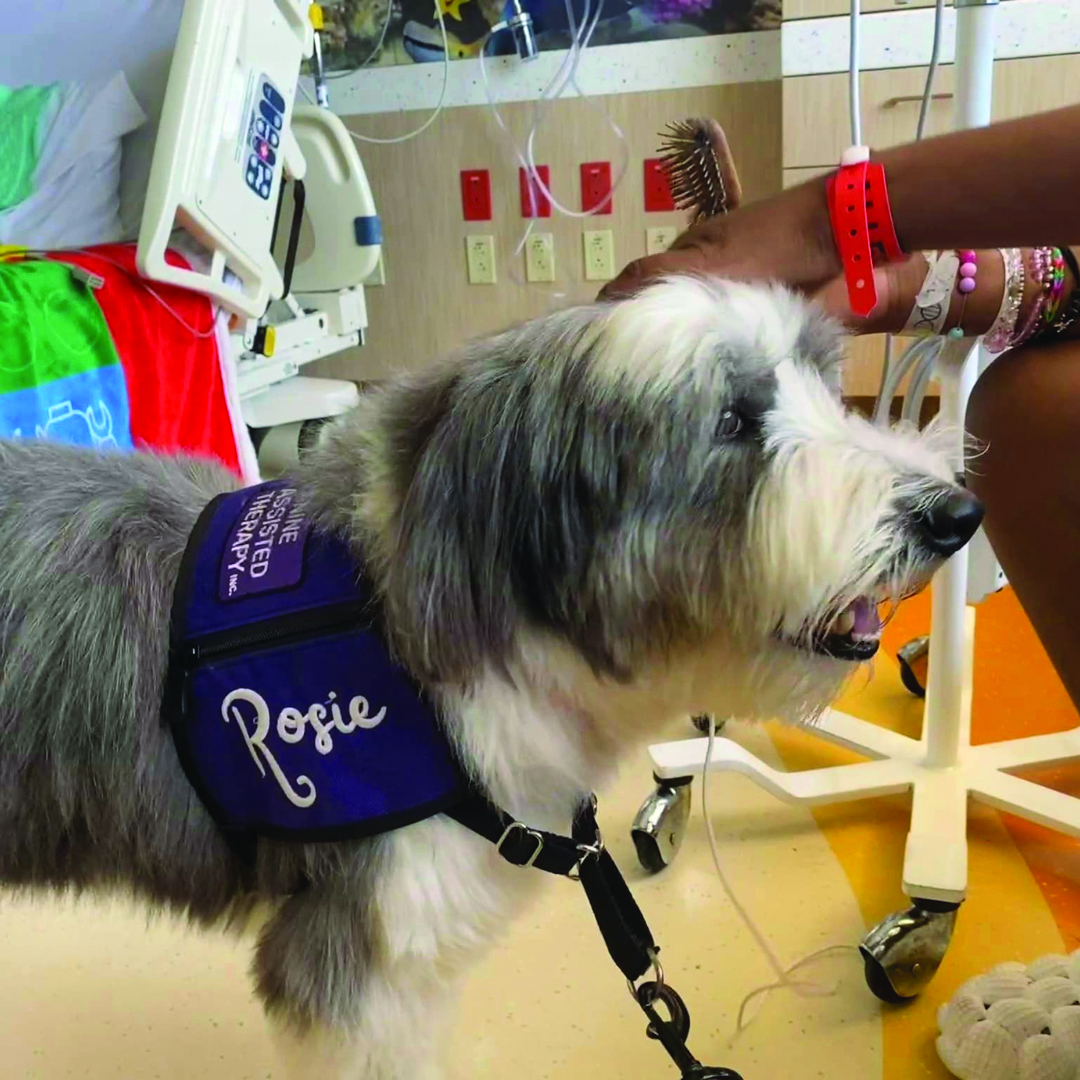
Nurses and therapists tried everything they could think of, but the young patient remained withdrawn and uncooperative. Then Rosie, a bearded collie, quietly entered the room and settled beside the teen. Almost by instinct, the teen’s hand reached out and started stroking Rosie’s silken fur. Her handler gave the teen a brush. As he began brushing the collie’s lush coat, his mood softened. He smiled. After spending time with the dog, he did something the medical staff had been unable to convince him to do: He got up and accompanied Rosie down the hall.
“The nurses were amazed,” says Monica Wesolowski, CEO of Canine Assisted Therapy, Inc. (C.A.T.). “He hadn’t wanted to listen to the staff, but he was willing to walk with Rosie.”
Stories like that are what drive the mission of C.A.T., one of South Florida’s largest pet therapy organizations. Founded in 2009 by two volunteers and their dogs visiting nursing homes, the nonprofit has grown into a network of approximately 150 therapy dog-and-person teams serving hospitals, schools, rehabilitation centers, addiction recovery programs, and hospice centers throughout Miami-Dade, Broward, and Palm Beach counties.
While most people have experienced the calming effects of petting a dog, there’s actual documented science behind pet therapy.
UCLA Health notes that interacting with dogs can lower heart rate and stress levels while increasing Phenylethylamine, which has the same effect as eating chocolate. “It actually changes the chemistry in your body,” Wesolowski says. “It helps you breathe. It helps you calm down.”
That calming effect is often most visible during life’s most difficult moments. C.A.T.’s specially trained teams regularly visit hospitals, hospice centers, and trauma settings where patients and families are facing illness, grief, and uncertainty.
During the trial of the Marjory Stoneman Douglas High School shooter, therapy dogs were stationed in a calm room for family members, attorneys, and others emotionally affected by the proceedings. “There could not have been a more stressful time,” Wesolowski says. “The dogs know. They feel the emotion.”
The organization is also the preferred therapy dog provider for Joe DiMaggio Children’s Hospital, where multiple C.A.T. teams visit regularly. Wesolowski experienced their impact personally when her grandson spent several days in the hospital. “Two of our therapy teams happened to come by,” she says. “They had no idea he was my grandson. It brought joy to my heart knowing they were there for him.”
Not every dog is suited for therapy work. Prospective therapy dogs must be at least one year old and have already earned their AKC Canine Good Citizen certification. They then undergo extensive temperament evaluations to ensure they are comfortable around strangers, medical equipment, crowds, and other dogs. The dogs are also evaluated on how much they like the tasks at hand. “We protect the dogs as much as we protect the people,” Wesolowski says. “They have to enjoy the work.”
Today, demand for therapy dog visits continues to outpace the organization’s capacity. Although C.A.T. has grown from two therapy dogs to 150 volunteer teams, there are still more requests than it can fulfill. “We’re always looking for special people with very special dogs,” Wesolowski says.
For those who have witnessed the power of a therapy dog visit, the appeal is easy to understand.
“They don’t ask questions. They don’t judge,” she says. “They just lean into you and give you comfort.”
So, the next time you have a stressful day, Wesolowski suggests trying a bit of canine therapy when you get home. “Look into your dog’s eyes, and they’ll look back. You’ll feel better.” To volunteer, visit catdogs.org.