

For many children, a hospital stay can bring uncertainty, fear, and long days away from the comforts of home. At Joe DiMaggio Children’s Hospital, however, some of the most beloved members of the care team walk on four legs.
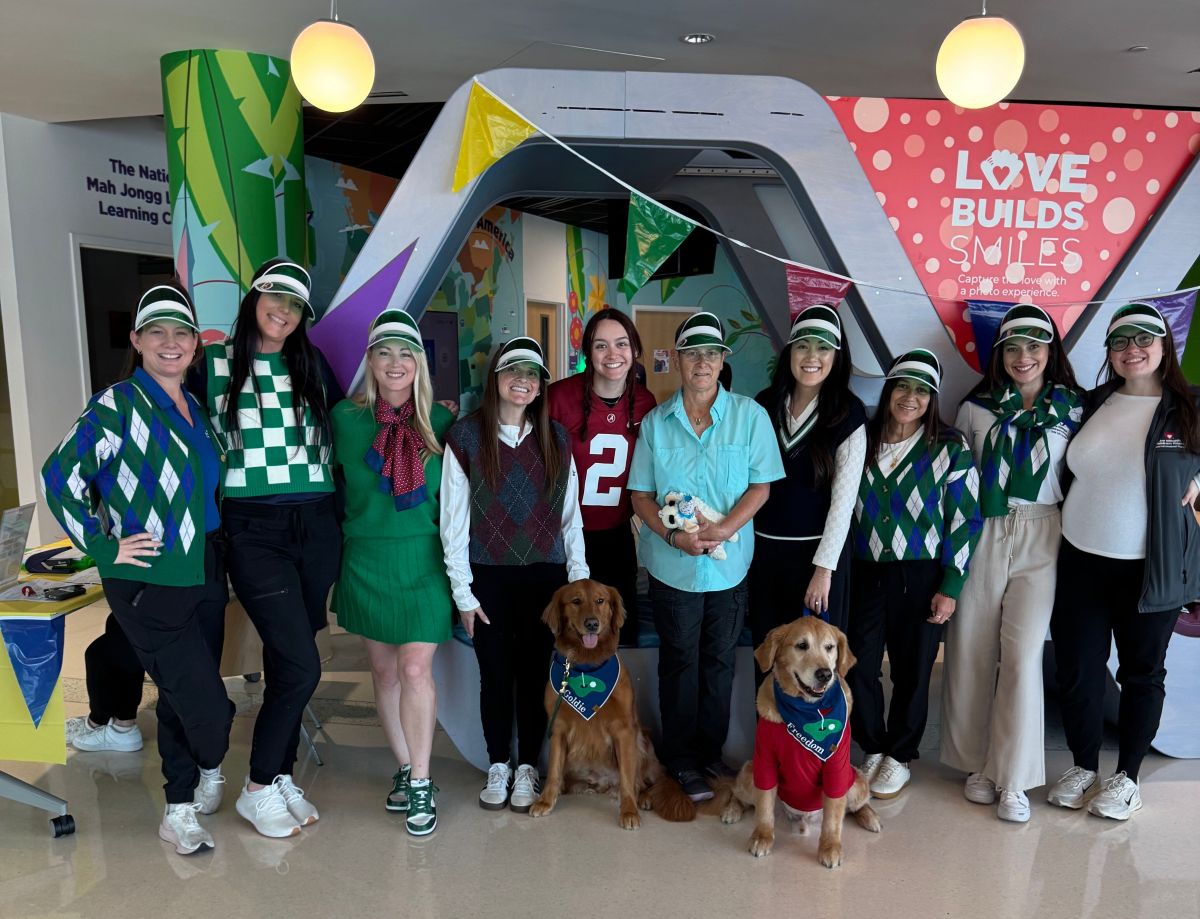
Freedom, Goldie, and the hospital’s newest facility dog, Dominos, are the stars of the hospital’s animal-assisted therapy program, bringing comfort, companionship, and motivation to patients throughout the facility. Affectionately known as “the boys,” the specially trained golden retrievers visibly do much more than brighten hallways. They help children through procedures, encourage participation in therapy, reduce anxiety, and provide emotional support for patients, families, and even hospital staff.
“These dogs are equipped to cover the needs of all of our patients,” says Carmen Cowart, a certified child life specialist and coordinator of the facility dog program. “They can help during procedures, motivate patients during rehabilitation, and create an environment that helps children heal.”
The program has been a part of Joe DiMaggio Children’s Hospital since 2009, beginning with its first facility dog, Nutmeg. Today, the impact extends throughout the hospital. More than 200 direct patient interactions are documented each month, though the true reach is far greater. The dogs make rounds across units, attend hospital events, visit families and siblings, and provide support to staff members following difficult days.
Research surrounding animal-assisted therapy continues to grow, with studies showing decreases in stress, anxiety, and even perceived pain when therapy dogs are involved. Cowart says the results are visible every day.
“When patients have a dog there, they state that they feel less pain than before the dog was there to visit,” she explains. “We can see the difference in how they engage and cope.”
That difference can be especially powerful for children facing lengthy treatments. Some patients develop deep bonds with specific dogs over the course of months or even years.
“One of our patients was in treatment for about seven years,” says Shannon Bajwa, director of Child Life and Creative Arts. “Every time she came, the dog was there with her. You’re living your life here, and every day you’re getting that dog’s attention, love, support, and motivation.”
Those connections often become unforgettable. Cowart recalls attending the funeral of a longtime patient whose relationship with one of the facility dogs had become widely known among family and friends.
“Everybody said, ‘This is her dog,’” Cowart remembers. “They all knew the dog because every single time she came for treatment, that dog was by her side.”
The dogs also inspire children to accomplish goals that might otherwise feel impossible. Patients recovering from surgery or injury often hesitate to get out of bed. Introduce a dog into the equation, and attitudes can change quickly.
“They find out they can walk the dog through the halls and suddenly they want to walk three times a day,” Bajwa says. “That motivation helps them recover and get home sooner.”
All three dogs receive extensive training through Educated Canines Assisting with Disabilities (ECAD), a Connecticut-based organization. By the time they arrive at Joe DiMaggio Children’s Hospital at age two, they have mastered roughly 80 commands and are prepared to work alongside healthcare professionals in a variety of clinical settings.
Supporting the program is a dedicated team of 16 trained handlers representing multiple disciplines throughout the hospital.
For families navigating difficult medical journeys, the presence of a wagging tail, a gentle nuzzle, or a familiar furry face can provide comfort when it is needed most.
“They’re always available,” Cowart says. “They’re constantly having that impact with patients who come through our doors.”